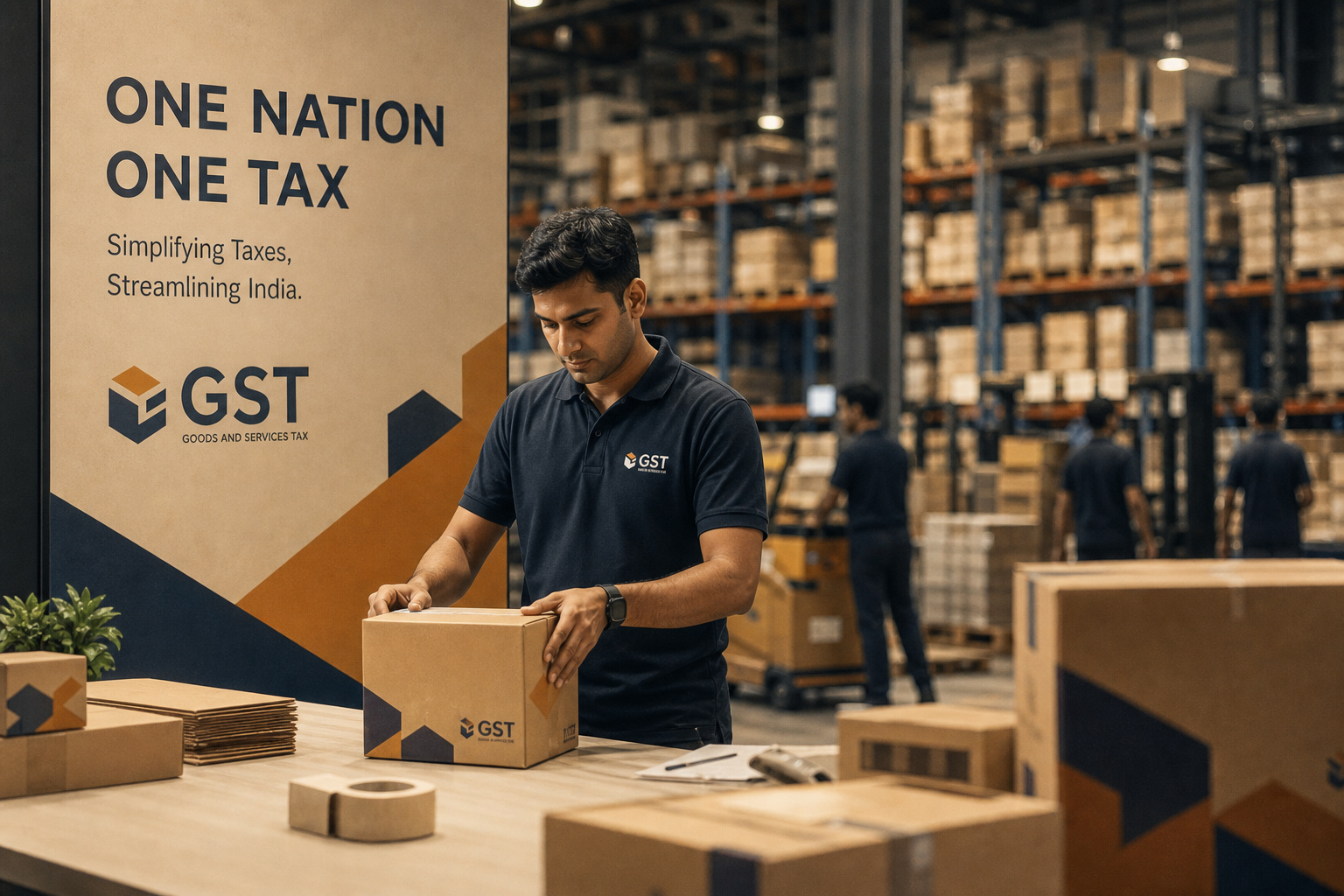
On 3 September 2025, the 56th meeting of the GST Council approved the most significant rate reform since GST’s 2017 launch, a package quickly branded “GST 2.0.” The long-criticised four-tier structure of 5%, 12%, 18% and 28% was collapsed into a simplified architecture: a 5% merit rate, an 18% standard rate, and a 40% special rate reserved for luxury and “sin” goods. The new rates took effect on 22 September 2025. Nine months into the new regime, the picture is clearer than the early commentary suggested, and the strategic implications run deeper than the headline numbers.
The consumer-facing story was one of relief. A broad swathe of mass-consumption goods, soaps, shampoos, toothpaste, hair oil, moved to 5%, while consumer durables such as air-conditioners, dishwashers and larger televisions fell from 28% to 18%. Several items moved to nil, including a set of food staples and, significantly, individual life and health insurance premiums. In services, affordable hotel stays up to ₹7,500 per day, gyms, salons and yoga centres were brought to 5%. For apparel and footwear, a value threshold was introduced, items up to ₹2,500 generally attract 5%, with 18% above that line.
The 40% special rate is where boards must pay attention. It applies to high-end motor vehicles, aerated and caffeinated beverages, private aircraft, yachts, and betting and gambling. Crucially, tobacco and related products, pan masala, cigarettes, beedi, were deferred from the new structure and will transition only after the compensation-cess loan and interest obligations are fully discharged. For affected sectors, the reform is not a simplification but a re-pricing event that touches margin, MRP and contract economics simultaneously.
Simplification at the slab level does not eliminate classification risk, in places it sharpens it. Wherever a rate boundary now turns on a value threshold (apparel and footwear at ₹2,500), an engine capacity or dimension (small versus large cars), or a screen size (televisions), the classification question migrates from “which of four slabs” to “which side of a bright line.” Bright lines invite disputes at the margin. Businesses should expect a fresh wave of classification and valuation scrutiny precisely at these thresholds, and should document their positions accordingly.
The input tax credit dimension is the one most often overlooked in the celebration of lower output rates. Where output rates fall but input rates do not move in step, accumulated credit and inverted-duty situations can arise, with refund and working-capital consequences. Pricing teams that adjusted MRPs downward to pass on rate cuts, as anti-profiteering expectations require, must reconcile those reductions against their credit position, or risk eroding the very margin the reform was meant to protect.
GST 2.0 is, in the end, a strategy problem dressed as a tax change. The winners are not simply those who pay a lower rate; they are those who re-modelled pricing, re-validated classification at the new thresholds, and re-mapped their ITC position before the regime went live. That is the Commercial pillar of our TCL Framework™, turning a regulatory reset into a deliberate commercial advantage rather than a scramble. Nine months in, the gap between businesses that planned for the reset and those that merely reacted to it is already visible on their margins.